
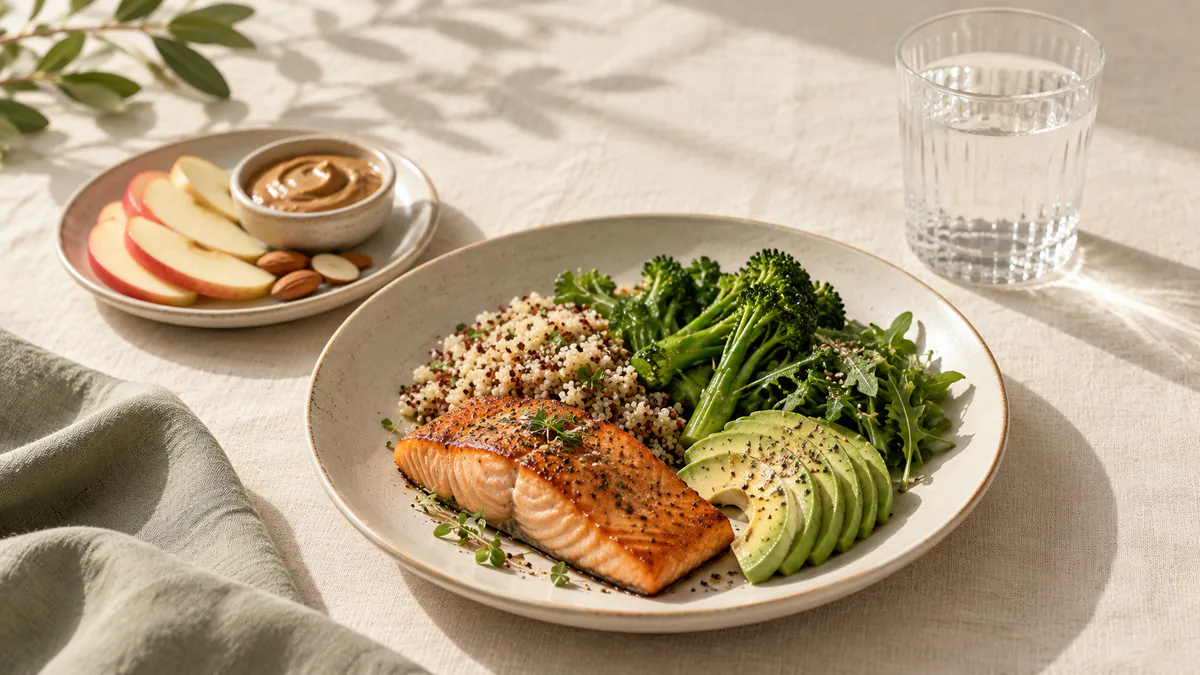
When people hear “blood sugar,” they often think about diabetes. But glucose is part of everyone’s physiology. It is one of the fuels our bodies use throughout the day, and our bodies work continuously to keep it within an appropriate range.
A rise in glucose after a meal is normal. The goal is not to eliminate every rise or chase a perfectly flat graph. It is to support overall metabolic health and identify problems when there is a reason to look more closely.
Start with what is on your plate
Meals containing carbohydrates can affect glucose levels differently depending on portion size, the type of carbohydrate, and what else you eat with it.
I often encourage people to think about the whole meal rather than a single “good” or “bad” food. An apple with nut butter is different from a large glass of apple juice. Rice alongside salmon, vegetables, and avocado is different from rice eaten on its own.
A few habits can help:
- Include fiber. Vegetables, beans, lentils, whole grains, and fruit support digestion and a balanced eating pattern.
- Pair carbohydrates with protein or healthy fats. This can slow digestion and help meals feel more satisfying.
- Be mindful of sweetened drinks. Sodas, juices, and sweetened coffees can add a substantial amount of sugar without being particularly filling.
- Choose an approach you can repeat. A nourishing meal that fits your life is more useful than a complicated plan you abandon after three days.
There is no universal protein target or meal schedule that suits everyone. Individual needs vary with age, activity, medical conditions, and medications.
Movement helps, too
Your muscles use glucose for energy. Walking after a meal can be an easy way to add movement to the day and may help with post-meal glucose management. It need not be elaborate. If walking is appropriate for you, even a brief stroll after lunch or dinner is a reasonable place to start.
Strength training also matters for metabolic health because maintaining muscle is an important part of healthy aging.
Do you need to track every glucose change?
Not necessarily. Continuous glucose monitors are valuable tools for many people with diabetes, but routine use in people without diabetes is a different question. A single reading cannot tell you whether a food is “bad” or diagnose a metabolic problem.
If you have symptoms, risk factors, or concerns about blood sugar, established screening tests and a conversation with your clinician may be more useful than interpreting wearable data on your own.
For most people, the fundamentals deserve more attention than the fluctuations on a graph: balanced meals, regular movement, sufficient sleep, and sustainable habits.
The goal is not perfect numbers after every bite. It is better long-term health.